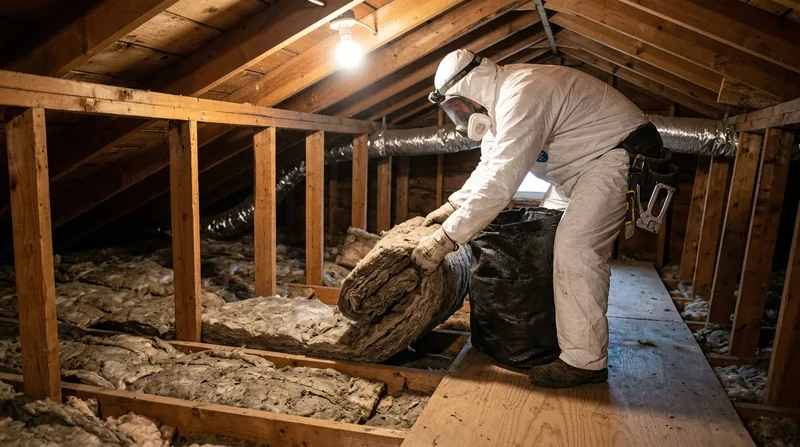




Attic insulation in older Bloomington homes often settles and compresses over the decades, leaving gaps where warm air escapes in winter and humid summer heat bleeds into living spaces below. Downtown Bloomington and the neighborhoods around Illinois State University are filled with mid-century ranches and Victorian-era homes whose original batts and blown-in fiberglass have sagged, matted, or absorbed moisture from the seasonal vapor drive that reverses with Central Illinois weather. Insulation removal in Bloomington is the necessary first step before any new foam or blown-in material can perform properly. We remove old, damaged, or failed insulation from attics, crawl spaces, and wall cavities so that new thermal and air barriers can seal your home against the cold Midwest winters and hot, humid summers that dominate this region. Whether your attic insulation has settled into the bottom third of the joist cavity, your crawl space under a farmhouse near Heyworth or Hudson is damp and moldy, or your basement rim joists have never been sealed, we handle the extraction and disposal so you can move forward with a fresh start.
Why Insulation Removal Matters in Bloomington Homes
Central Illinois winters drop below freezing for months, and summers push humidity into the 70-percent range regularly. Insulation that has settled, gotten wet, or absorbed moisture cannot breathe or perform. Compressed fiberglass loses its R-value, and wet material becomes a vector for mold growth and odor that no amount of fresh air can fix. Removing failed insulation is not optional if you want new material to work.
- Old fiberglass batts in Bloomington attics often settle into the lower half of the joist cavity, leaving the upper half uninsulated and exposed to winter heat loss.
- Crawl spaces under older homes in Downs, Hudson, and Heyworth collect moisture from the ground and seasonal water intrusion, turning insulation into a damp, useless mass.
- Blown-in material that was installed without proper air sealing around rim joists and band joists allows cold air to bypass the insulation entirely during Midwest winters.
- Vermiculite insulation found in some mid-century Bloomington homes must be left undisturbed and tested by a licensed professional, not removed by us.
Removing compromised insulation before installing new foam or blown-in material is the difference between a retrofit that works and one that fails within five years.
Key info: Illinois law does not require a permit for insulation removal in most residential attics and crawl spaces, but your local building department in Bloomington or Normal can confirm what applies at your address. We help you navigate those requirements before we start work. For official guidance, check with your city building department or visit the Illinois Emergency Management and Hazard Mitigation Agency.
How We Remove Insulation in Bloomington: A Straightforward Process
We arrive with a truck-mounted vacuum system, containment barriers, and the equipment needed to extract old material safely and haul it away. Our crew isolates the work area so dust and debris do not spread into living spaces, removes the failed insulation in stages, and leaves the cavity clean and ready for new foam or blown-in material. The whole job is typically completed in a single day for a standard attic or crawl space, though larger homes or multiple zones may take longer.
- We inspect the attic or crawl space, identify what material is present, and check for moisture, mold, or structural damage that must be addressed before removal can proceed.
- We set up containment and mechanical ventilation to keep dust confined and air quality safe during extraction.
- We remove the old insulation using a truck-mounted vacuum or manual extraction, depending on the material type and access.
- We haul all material to a licensed disposal facility and provide documentation of removal.
- We leave the cavity clean, with all air sealing gaps marked so new insulation can be applied correctly.
Once the old material is out, the cavity is ready for new attic spray foam insulation, crawl space foam, or blown-in fiber, depending on your home's needs and your budget.
Example: A 1960s ranch in Bloomington with a 1,200-square-foot attic of settled fiberglass typically takes 4 to 6 hours to remove and haul away. A crawl space under a farmhouse near Heyworth with wet insulation and mold growth takes longer because we must verify moisture is controlled before removal begins, and we never spray new foam over a wet substrate.
Insulation Removal Methods: What Works Best
| Method | Description | Best For |
|---|---|---|
| Truck-Mounted Vacuum Extraction | Blown-in fiberglass or cellulose is suctioned into a containment truck using negative air pressure, keeping dust confined and containment tight. | Large attics with settled blown-in material, crawl spaces with loose-fill insulation, homes in Normal and Bloomington with high dust sensitivity. |
| Manual Batt Removal | Fiberglass or mineral wool batts are pulled from joists by hand, bagged, and removed. Slower than vacuum but allows inspection of each section for moisture or damage. | Smaller attics, batts over uneven framing, cavities with visible mold or water staining that need inspection before full removal. |
| Spray Foam Encapsulation and Removal | Old foam is mechanically scraped or cut away from framing, then removed. New foam is applied directly over the clean substrate without disturbing the existing material unnecessarily. | Attics with failed or settling spray foam, sealed cavities where vacuum extraction is not feasible, retrofits on metal buildings or barndominiums. |
| Wet Material Extraction with Drying | Damp insulation is removed and the cavity is dried with mechanical dehumidifiers and air movers before any new material is installed. Moisture source must be identified and fixed first. | Crawl spaces under older Bloomington homes with ground moisture, attics with roof leaks, basements with seasonal water intrusion. We walk away if the leak is not fixed first. |
Insulation Removal Cost in Bloomington: What to Expect
The cost of insulation removal in Bloomington depends on the size of the space, the type of material, how accessible it is, and whether the cavity is wet or contaminated. A straightforward attic removal for a single-story ranch with settled fiberglass typically starts around $950 and moves up from there. Larger homes, multiple zones, wet material that requires drying, or crawl spaces with limited access can push the cost higher because the work takes longer and requires more equipment or specialized handling.
Several factors affect the final price. The square footage of the attic or crawl space is the primary driver: a 1,200-square-foot attic costs more to clear than a 600-square-foot bonus room over a garage. The type of material also matters: blown-in fiberglass is faster to vacuum out than batts, which must be pulled by hand. Access is critical: an attic with a full-size staircase and good headroom is quicker than one with a pull-down ladder and low eaves. Moisture and contamination add time and cost because we must dry the cavity and may need to haul material to a specialized disposal facility.
We always provide a written estimate with R-value and thickness specifications so you know exactly what you are paying for and what the new insulation will deliver. Get 2 or 3 estimates from different contractors so you can compare scope, method, and pricing. The cheapest bid often cuts corners on containment, ventilation during cure, or proper documentation. The most expensive bid may include work you do not need. The middle estimate from a local contractor who explains their process and stands behind their work is usually the right choice.
For a detailed breakdown of pricing for insulation removal and other spray foam services, visit our pricing page. Call us at (309) 487-2702 for a free estimate with no obligation.
What to Look for When Hiring an Insulation Removal Contractor Near Bloomington
Insulation removal is not complicated, but it is dusty, heavy work that requires the right equipment and a clear process. When you are interviewing contractors in Bloomington, Normal, Downs, or Hudson, look for these markers of a professional shop. Ask for proof of insurance (fully insured coverage is the standard). Request references from recent jobs and actually call them. Get a written estimate that specifies the square footage, the method (vacuum or manual), and the disposal plan. Verify that the contractor is registered with the city or county if your local building department requires it. Check whether the contractor has experience with the specific material in your attic or crawl space: some contractors specialize in blown-in removal, others in batt extraction, and a few handle all three.
Avoid contractors who promise an estimate over the phone without seeing the space. Avoid anyone who quotes a price per square foot without inspecting the attic for access, moisture, or framing obstacles. Avoid contractors who say they will remove insulation and install new material in the same day without a multi-day cure window: that is a sign they are cutting corners on air quality and installation time. Avoid anyone who cannot provide a current insurance certificate or references. If you are in an HOA community in the newer subdivisions on the east side of Bloomington, check your architectural guidelines to see whether insulation removal or new foam installation requires approval. Most HOAs do not govern interior insulation work, but it is worth confirming.
When you are ready to move forward, contact us for a free estimate. We will inspect your attic or crawl space, explain what needs to come out and why, and give you a clear price before we start work.
Insulation Removal in Bloomington: Pricing Guide
| Service | Price | Details |
|---|---|---|
| Standard attic removal (up to 1,200 sq ft) | Starting at $950 | Settled fiberglass or blown-in material, truck-mounted vacuum extraction, single-day service, disposal included |
| Crawl space removal (up to 800 sq ft) | Starting at $1,100 | Limited access, manual extraction, moisture assessment, drying verification before new foam installation |
| Wet or contaminated insulation removal | On estimate | Damp material, mold inspection, drying equipment, specialized disposal, moisture source must be identified first |
| Multi-zone or large home removal | On estimate | Attic plus crawl space, multiple stories, complex access, or material requiring staged removal over two or more days |
| Travel and service call | Included | No mileage fee or travel charge within Bloomington and surrounding areas, included in all estimates |
| Free written estimate | No charge | Response within 24 hours, on-site inspection, detailed scope and pricing, no obligation to book |
Indicative pricing, the exact cost depends on square footage, finish, and site access. Free personalized estimate within 24h at (309) 487-2702.


