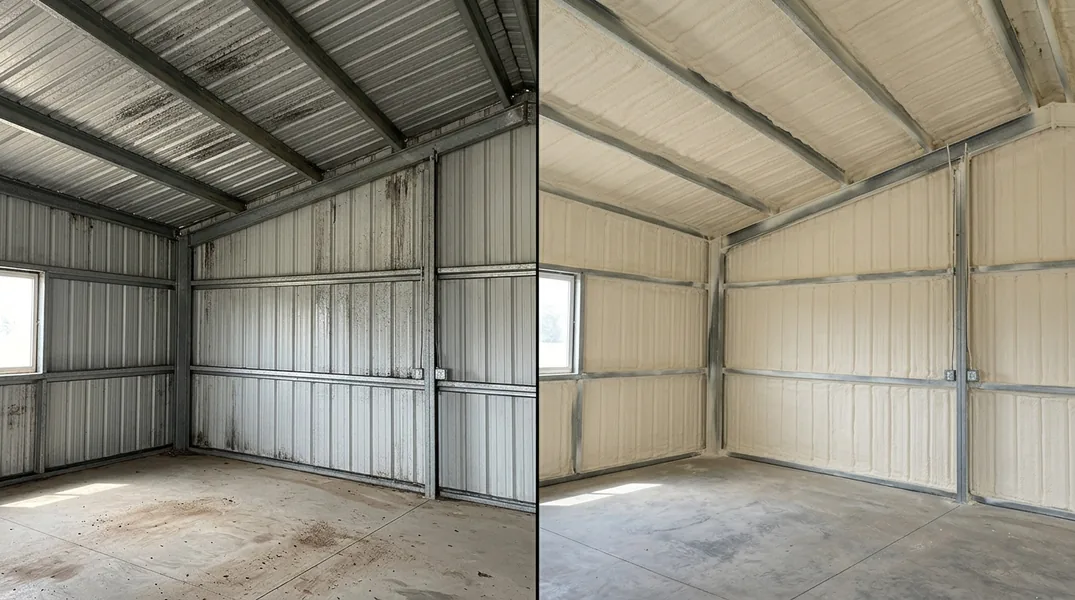
Why Mid-Century Ranches in McLean County Need Attic Upgrades
Mid-century ranch homes built between the 1950s and 1970s across McLean County represent a classic American architectural style, but many of these charming properties suffer from inadequate attic insulation. When these homes were originally constructed, building codes and energy standards were far less stringent than today's requirements. Most original attics in these ranches contain minimal insulation, often just a few inches of fiberglass batts or even loose cellulose that has settled and compressed over decades.
The problem compounds in Bloomington and surrounding areas where winters are harsh and summers can be humid. Inadequate attic insulation forces your heating and cooling systems to work overtime, driving up energy bills by 15 to 30 percent. Beyond the financial impact, poor insulation creates uncomfortable temperature swings throughout your home, cold spots in winter, and heat buildup in summer. For homeowners in Bloomington looking to preserve their mid-century ranch while improving comfort and efficiency, upgrading the attic is one of the smartest investments you can make.
Spray Foam vs Blown-In Insulation: Which Performs Better?
Attic Spray Foam Insulation and blown-in insulation are the two most popular choices for attic retrofits in older homes. Blown-in insulation, typically made from cellulose or fiberglass, is installed by blowing loose fibers into the attic cavity. It's often chosen because it's relatively affordable and can be installed quickly without major disruption. However, blown-in insulation has significant limitations that make it less suitable for mid-century ranches.
Spray foam creates an air-tight seal that blown-in insulation simply cannot match. Because blown-in insulation is loose and granular, air infiltrates around and through it, reducing its effective R-value over time. Spray foam expands to fill every crack, crevice, and gap in your attic, eliminating air leaks that account for up to 40 percent of home energy loss. Additionally, blown-in insulation settles and compresses as it ages, losing up to 20 percent of its insulating value within the first few years. Spray foam maintains its R-value indefinitely, making it a superior long-term investment for homeowners serious about energy efficiency.
Spray Foam vs Fiberglass: Why Fiberglass Falls Short in Older Attics
Fiberglass batts have been the standard attic insulation for generations, and many mid-century ranches still rely on the original fiberglass installation from the 1960s or 1970s. While fiberglass remains affordable, it has inherent weaknesses that make it poorly suited for aging homes with settling foundations and uneven framing. Fiberglass batts only insulate where they're installed; they do nothing to seal air leaks around joists, rafters, pipes, electrical conduits, or other penetrations common in older attics.
Moisture is another critical concern with fiberglass in older homes. If your attic lacks proper ventilation or experiences condensation issues, fiberglass absorbs moisture and loses its insulating properties while becoming a breeding ground for mold and mildew. Closed Cell Spray Foam Insulation actively resists moisture, creating a vapor barrier that protects your attic and home structure from water damage. For homeowners in McLean County dealing with the seasonal humidity and temperature fluctuations typical of Illinois, spray foam's moisture resistance provides peace of mind that fiberglass simply cannot offer.
Spray Foam vs Cellulose: The Durability and Performance Advantage
Cellulose insulation, made from recycled paper, appeals to eco-conscious homeowners and carries a lower upfront cost than spray foam. However, cellulose has several performance drawbacks that become apparent in older homes like mid-century ranches. Cellulose is treated with fire retardants and insecticides, but it remains vulnerable to moisture absorption, settling, and pest infiltration. In attics with poor ventilation or any history of roof leaks, cellulose can harbor moisture and create conditions favorable to mold growth and wood rot.
Cellulose also settles more dramatically than fiberglass over time, especially in attics with uneven framing common in older homes. A 10-inch cellulose installation can compress to 6 or 7 inches within a decade, significantly reducing its R-value. Open Cell Spray Foam Insulation and closed-cell spray foam both maintain their R-value for the life of your home, typically 80 years or more. For mid-century ranches where you're planning to stay long-term or improve resale value, the durability of spray foam makes it the smarter choice despite the higher initial investment.
Best Insulation for Attic Retrofits: Why Spray Foam Wins for Mid-Century Homes
When you evaluate the best insulation for attic upgrades in older homes, spray foam emerges as the clear winner across multiple performance metrics. It delivers superior air sealing, eliminating the thermal bridging that occurs with batts and blown-in products. It resists moisture, protecting your attic from the humidity and condensation that plague older homes with compromised ventilation. It maintains its R-value indefinitely, ensuring your energy savings don't diminish over time. And it provides structural support to your attic framing while reducing noise transmission from outside.
For mid-century ranches across McLean County, the added comfort, durability, and long-term energy savings justify the higher upfront cost. Many homeowners find that their energy bill reductions pay back the spray foam investment within 5 to 7 years, after which they enjoy years of lower heating and cooling costs. If you're ready to explore whether spray foam is right for your home, Bloomington Spray Foam Insulation offers a free estimate to assess your attic and provide a customized solution.
Attic Spray Foam Insulation Cost in Bloomington: What to Budget
The pricing for spray foam insulation varies based on your attic size, current insulation condition, and whether you choose open-cell or closed-cell foam. Open-cell spray foam typically costs between $1.50 and $2.50 per board foot, while closed-cell spray foam runs $3.50 to $5.00 per board foot. For a typical mid-century ranch with a 1,500-square-foot attic, homeowners can expect to invest between $3,000 and $8,000 depending on the type and depth of foam installed. While this is higher than blown-in cellulose or fiberglass, the superior performance and longevity make it a sound investment.
Don't let the initial cost deter you from considering spray foam for your mid-century ranch. Many homeowners qualify for energy efficiency tax credits and rebates that reduce their net cost. Additionally, the energy savings accumulate month after month on your heating and cooling bills. To understand the true value and get an accurate quote for your specific home, contact Bloomington Spray Foam Insulation at (309) 487-2702 or request a free estimate online. Our team will evaluate your attic, discuss your goals, and provide transparent pricing with no surprises.
Looking for a professional spray foam insulation contractor in Bloomington? Bloomington Spray Foam Insulation responds fast for all your spray foam insulation needs.
Get a Free Quote