Understanding Humidity's Impact on Bloomington Homes
Summer in Bloomington brings more than just warm temperatures. The combination of heat and moisture creates a challenging environment for homes, particularly in areas like crawl spaces and wall cavities where air circulation is limited. When outdoor humidity levels spike, that moisture seeks pathways into your home's structure, and once it gets inside, it becomes trapped in poorly insulated spaces.
The physics is straightforward: warm, humid air naturally moves toward cooler areas. During the day, your home's exterior walls absorb heat. At night, when temperatures drop and your air conditioning kicks in, the temperature differential creates a pressure gradient that pulls moisture into wall cavities and foundation spaces. Over weeks and months, this repeated cycle of moisture infiltration and condensation can lead to wood rot, mold growth, and structural deterioration that homeowners often don't notice until significant damage has already occurred.
For homeowners in Bloomington, understanding this moisture dynamic is the first step toward protecting your investment. The problem isn't just about discomfort; it's about preventing costly repairs down the road.
Why Traditional Insulation Falls Short Against Summer Moisture
Fiberglass and cellulose insulation, while affordable, have a critical weakness when it comes to humidity control. These materials are porous and hygroscopic, meaning they absorb and retain moisture. In a humid climate like central Illinois, traditional insulation can actually trap moisture within wall cavities, creating an ideal environment for mold and mildew growth. Once these materials become damp, they lose their insulating effectiveness and can take weeks to dry out completely.
Closed Cell Spray Foam Insulation works differently. Its dense structure creates a moisture barrier that prevents water vapor from penetrating into wall cavities and foundation spaces. Unlike traditional materials, closed cell foam doesn't absorb moisture. Instead, it deflects it, keeping your home's structural components dry throughout the humid summer months. This is why many homeowners in the region are making the switch to spray foam solutions.
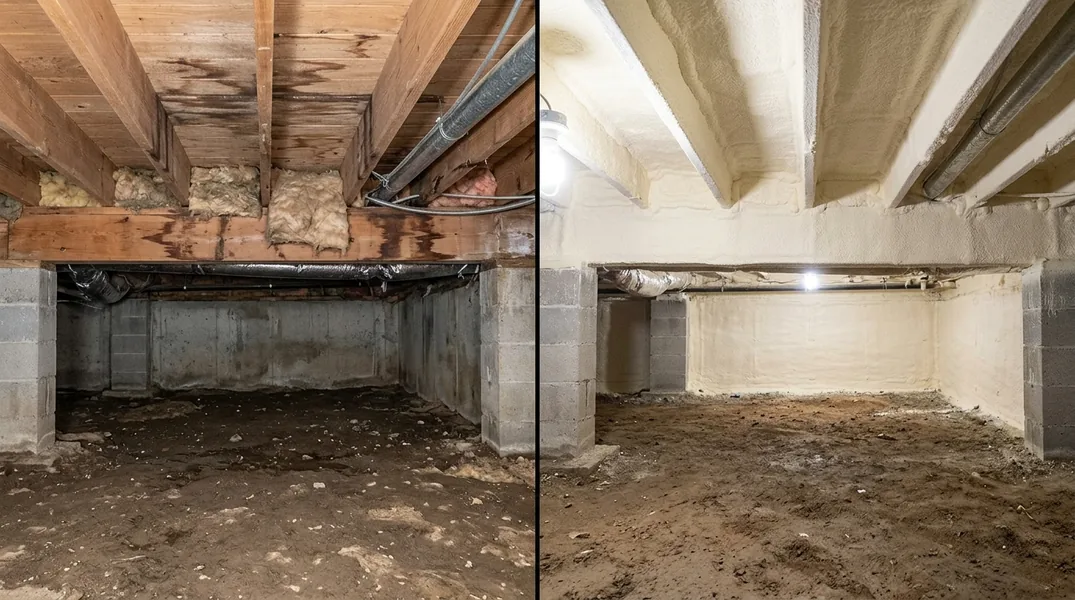
The difference becomes especially apparent in crawl spaces and basement areas where humidity tends to concentrate. A crawl space with traditional insulation can become a breeding ground for moisture problems, while the same space protected with quality insulation maintains stable humidity levels and protects wooden support structures from decay.
Crawl Space Insulation: Your Foundation's First Line of Defense
Your home's crawl space is often overlooked, yet it's one of the most critical areas for moisture management. Bloomington homes with crawl spaces face particular challenges during humid summers because these areas naturally collect moisture from the soil and outside air. Without proper protection, crawl space moisture migrates upward into your home, affecting indoor humidity levels, floor comfort, and overall air quality.
The best approach to crawl space insulation involves creating a complete moisture control system. This typically combines proper vapor barriers with effective insulation. Crawl space spray foam solutions seal air leaks, prevent moisture infiltration, and maintain consistent temperatures year-round. When applied correctly, spray foam insulation creates an unbroken thermal and moisture barrier that traditional batts simply cannot match.
Many homeowners don't realize that cold floors during winter are often a symptom of crawl space moisture problems during summer. When your crawl space isn't properly sealed and insulated, warm air escapes during winter, and humid air infiltrates during summer. Cold floors insulation solutions that address the root cause in the crawl space provide lasting comfort improvements. The investment in proper crawl space protection pays dividends in both comfort and structural longevity.
Pier and Beam Homes: Special Considerations for Central Illinois
Pier and beam construction, common in older Bloomington homes, presents unique moisture challenges. These homes sit elevated on support posts, creating open space underneath that's fully exposed to outdoor humidity. During central Illinois summers, this exposed area becomes a humidity reservoir that affects the entire home above it. Uninsulated pier and beam foundations allow warm, moist air to rise directly into living spaces, making air conditioning less effective and creating uncomfortable temperature fluctuations.
Pier and beam insulation requires a different approach than standard crawl space work. The open structure means you need insulation that can withstand exposure and resist moisture without deteriorating. Spray foam is ideal for this application because it adheres directly to the wooden beams and rim joists, creating an airtight seal that blocks humid air from entering your home. The material's closed cell structure ensures that even direct exposure to moisture doesn't compromise its performance.
Homeowners with pier and beam construction often report that proper insulation in these spaces is the single most effective upgrade they can make for summer comfort. By sealing the space between ground and living area, you eliminate a major source of humidity infiltration and create more stable indoor conditions that your air conditioning system can manage efficiently.
Wall and Injection Foam: Protecting Existing Wall Cavities
For homes where crawl spaces and foundations are already problematic, humidity often moves through exterior wall cavities. If your walls lack insulation or have deteriorated insulation, summer moisture can condense inside the wall structure where you can't see it. This hidden moisture leads to mold growth, wood rot around window and door frames, and structural damage that only becomes apparent after significant deterioration has occurred.
Wall & Injection Foam Insulation allows you to address these moisture problems without tearing apart your walls. By injecting foam into existing cavities, professionals can fill voids and seal air leaks that traditional insulation missed. This approach is particularly valuable for older homes where original insulation has settled or deteriorated. The foam expands to fill every cavity and gap, creating a continuous moisture barrier that protects your walls from summer humidity.
The beauty of injection foam is that it works with your home's existing structure. Whether your walls are brick, wood frame, or stone, injection foam can be applied through small holes that are later patched. The result is improved moisture control, better energy efficiency, and protection against the humidity stresses that central Illinois summers impose on home walls.
Getting Started with Professional Spray Foam Protection
If you're concerned about humidity damage to your Bloomington home, the first step is a professional assessment. A qualified spray foam contractor can evaluate your crawl space, foundation, walls, and other vulnerable areas to identify where moisture problems are most likely to develop. This inspection reveals which areas need immediate attention and which solutions will provide the best protection for your specific home.
Bloomington Spray Foam Insulation offers free evaluations to homeowners who want to understand their moisture and insulation challenges. During a consultation, professionals can explain how humidity affects your specific home's construction type and recommend the most effective solutions. Whether you need crawl space spray foam, pier and beam insulation, or wall injection foam, a professional assessment ensures you invest in the right solution.
Don't let another humid summer stress your home's walls and foundation. Contact Bloomington Spray Foam Insulation at (309) 487-2702 to schedule your free estimate and learn how spray foam insulation can protect your home from moisture damage. The cost of prevention is always less than the cost of repairs after damage occurs.
Looking for a professional spray foam insulation contractor in Bloomington? Bloomington Spray Foam Insulation responds fast for all your spray foam insulation needs.
Get a Free Quote